Are You Curious? Why Looking Beneath Your Dog’s Behaviour Matters
 Sonia Catherall
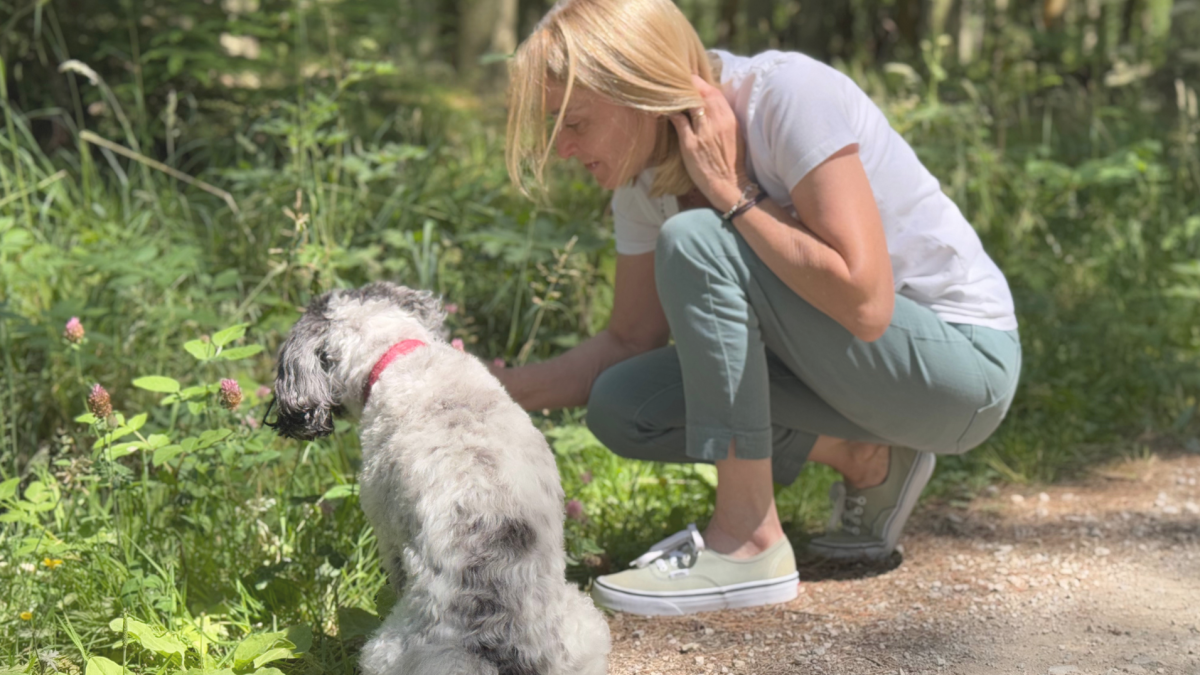
I read something recently about curiosity starting with an itch to explore, and it really stayed with me because it sounded just like me.
I’m curious by nature. I have a lot of itches. I like to learn and to understand things, especially what sits underneath a dog’s behaviour, so I can support them in a way that actually helps.
That curiosity can probably be a bit annoying to other people at times. I ask questions. I don’t tend to accept surface explanations very easily. I’ve never been especially interested in simply changing what a dog does on the outside. I want to know why it’s happening, what the dog might be experiencing, and what their behaviour is trying to communicate in that moment.
For me, curiosity isn’t about judgement or surface labels. It’s about careful analysis, slowing things down, and asking better questions.
And those questions matter, because behaviour never exists on its own.
.
Behaviour Is Not the Whole Story
One of the biggest misunderstandings about dog behaviour is the idea that what we see is the full picture.
Barking, lunging, freezing, avoiding, pulling, growling, shutting down, these are not problems in isolation. They are visible responses to something the dog is experiencing internally or externally, often both.
Behaviour is shaped by many overlapping factors, including emotional state, learning history, physical comfort, environment, predictability, and past experiences. None of these exist in neat boxes. They interact constantly.
When we focus only on stopping behaviour, we miss the information it’s offering us.
Curiosity asks a different question.
Instead of how do I stop this? it asks what might be causing this right now?
That shift matters more than it might seem.
.
Why Curiosity Changes How We Support Dogs
When guardians approach behaviour with curiosity, something subtle but important happens. The focus moves away from control and towards understanding.
This doesn’t mean safety is ignored. It doesn’t mean behaviour is excused. It means we recognise that behaviour is meaningful, even when it’s hard.
Curiosity enables us to notice patterns rather than isolated incidents.
It helps us see context instead of assuming intent.
It opens the door to support that actually meets the dog where they are.
Without curiosity, it’s easy to label behaviour as stubborn, attention-seeking, manipulative, or “out of the blue”. With curiosity, those labels start to fall away.
What replaces them is information.
.
What Sits Underneath Behaviour
When I’m supporting dogs and their guardians, I’m always interested in what might be sitting underneath the behaviour we are seeing.
That might include emotional responses such as fear, frustration, uncertainty, or overwhelm. It might involve previous learning, where a behaviour has worked before to create distance or relief. It might relate to physical discomfort, pain, or sensory sensitivity. It might be shaped by the environment itself, how predictable it is, how much pressure it places on the dog, or how safe it feels.
None of these factors are visible in the behaviour alone.
Curiosity doesn’t give us instant answers, but it helps us ask questions that move us closer to understanding. And understanding is what allows change to happen without pressure.
.
Why “Fixing Behaviour” Often Falls Short
Many guardians come to behaviour support feeling exhausted. They have tried advice, techniques, and strategies focused on stopping behaviour, and nothing seems to stick.
That’s not because they haven’t tried hard enough.
Often, it’s because the support has focused on the behaviour itself rather than what’s causing it.
If the underlying experience doesn’t change, behaviour often persists or reappears in a different form. This can feel incredibly disheartening for guardians who are doing their best.
Curiosity helps us step back and ask whether the support being offered actually makes sense from the dog’s perspective.
Does it reduce pressure?
Does it increase predictability?
Does it help the dog feel safer or more able to cope?
If the answer is no, behaviour change is unlikely to be sustainable.
.
Curiosity and Emotional Safety
Curiosity and emotional safety are closely linked.
A dog who feels emotionally safe enough will often show more interest in their surroundings. They may sniff more, pause more, take in information rather than rushing through it. These are signs that the dog has enough capacity to explore.
When emotional safety is compromised, curiosity often disappears. The dog’s focus narrows. Behaviour becomes more urgent, more reactive, or more withdrawn.
This isn’t a failure. It’s information.
Curiosity helps us recognise when a dog’s world feels manageable and when it doesn’t. That awareness is invaluable when deciding how to support them.
This idea of emotional safety and curiosity runs through much of the education I share inside the Confident Canine Hub, particularly around supporting sensitive, fearful, or overwhelmed dogs.
.
What Curiosity Looks Like in Everyday Life
Curiosity isn’t always dramatic or obvious.
Sometimes it looks like a dog choosing to sniff instead of pulling away.
Sometimes it looks like a pause where there used to be a reaction.
Sometimes it looks like a guardian noticing a pattern they hadn’t seen before.
It also looks like guardians asking questions rather than blaming themselves or their dog.
What changed today?
What was different about that situation?
What might my dog have been experiencing right then?
These questions don’t demand immediate answers. They simply keep the door open.
.
How This Shapes the Way I Support Guardians
This curiosity-led approach is at the heart of how I support dogs and their guardians during behavioural consultations, where we take the time to understand what’s causing a behaviour rather than focusing on surface change alone.
This way of thinking shapes everything I do. How I observe. How I respond. How I support dogs and their guardians.
It influences the pace I work at, the strategies I suggest, and the importance I place on emotional experience rather than surface compliance.
Because when we understand what’s causing a behaviour, we are far more likely to choose approaches that are kind, effective, and grounded in the dog’s needs.
Curiosity doesn’t make behaviour support easy. But it does make it more honest, more ethical, and more likely to lead to lasting change.
.
A Question Worth Sitting With
If there’s one thing I would encourage guardians to take from this, it’s not a technique or a rule. It’s an invitation.
To stay curious.
To notice without rushing to fix.
To wonder what might be sitting underneath what you’re seeing.
What are you curious about when it comes to your dog’s behaviour?
You don’t need the answer straight away.
The question itself already matters.