Why Do Some Dogs Seek Physical Contact, While Others Prefer Space?
 Sonia Catherall
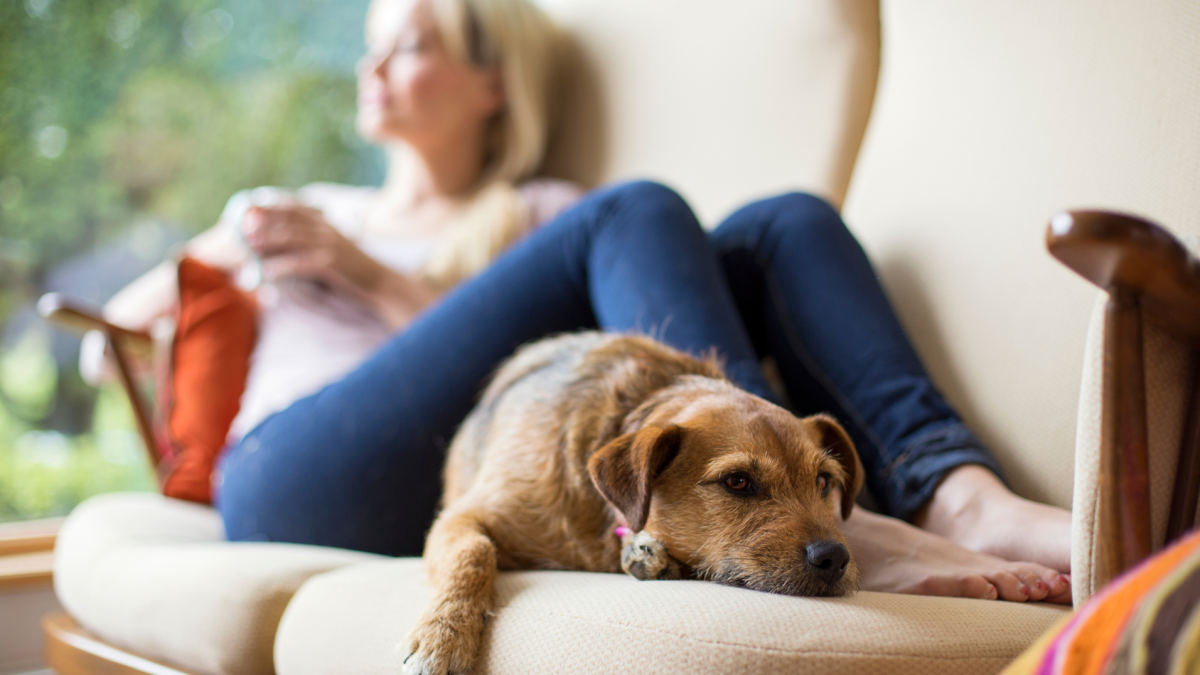
Dogs vary enormously in how much physical closeness they want with the people they live with. Some dogs lean in, paw, nudge, or choose to rest pressed against a guardian whenever the opportunity arises. Others prefer to settle nearby without touching, or actively move away from contact. Neither pattern is inherently better, healthier, or more “bonded”.
To understand why dogs differ in this way, we need to look at attachment, learning history, emotional regulation, physical comfort, and context, rather than assuming personality labels like “clingy”, “aloof”, or “independent”.
This blog explores what the science tells us about contact-seeking behaviour in dogs, why it may increase at certain times of day, and why some dogs choose distance instead.
.
Proximity Seeking Is a Normal Canine Behaviour
In behavioural science, choosing to be physically close to another individual is known as proximity-seeking. In dogs, this behaviour has been studied most extensively through the lens of attachment theory.
Multiple studies using adapted versions of Ainsworth’s Strange Situation Procedure show that many dogs form attachment bonds with their guardians that function in similar ways to caregiver–infant relationships in humans.
Within this framework, guardians often serve two key roles:
A safe haven: a source of comfort when the dog experiences stress or uncertainty
A secure base: a presence that allows the dog to relax, explore, or rest more easily
From this perspective, behaviours such as leaning, nudging, resting against a guardian, or seeking body contact are not “attention-seeking” in a trivial sense. They are meaningful relational behaviours that can support emotional regulation and a sense of safety.
.
Why Contact Seeking Often Appears in the Evening
Guardians frequently notice that contact-seeking behaviours become more pronounced in the evening. There is no single study that isolates “evening cuddles” as a discrete research topic, but several well-established findings help explain this pattern.
.
1. Opportunity and Predictability Matter
Behaviour does not occur in a vacuum. It is shaped by context and access.
Evenings are often when guardians are:
- sitting rather than moving around
- quieter and more predictable
- physically available for longer periods
When contact is easier to access, dogs are more likely to choose it. From a learning perspective, behaviours that have been reliably met with comfort or calm interaction in the past are more likely to be repeated in similar contexts. This does not mean the dog is demanding contact. It means the environment now invites the behaviour to occur.
.
2. Dogs Track Human Routines Closely
Research using activity monitors shows that many companion dogs align their daily activity patterns with those of their guardians. As households settle, dogs often settle too. For some dogs, settling looks like choosing closeness. For others, it looks like choosing a nearby bed or a quiet corner. Both are valid expressions of regulation.
.
3. End-of-Day Effects Can Increase Contact Seeking
After a full day of stimulation, movement, and sensory input, some dogs show:
- reduced tolerance for frustration
- increased desire for predictability
- stronger preference for familiar contact
This does not imply anxiety or dependency. It reflects normal fluctuations in arousal and coping capacity across the day.
.
When Increased Contact Seeking Can Signal Discomfort
While proximity seeking is often relational and context driven, changes in contact-seeking behaviour deserve thoughtful attention. There is strong clinical evidence that pain and physical discomfort can influence behaviour in dogs, including increased clinginess, restlessness, or comfort-seeking (Mills et al., 2020).
.
In these cases, dogs may:
- seek contact but struggle to settle
- change position frequently
- show subtle stiffness or reluctance to move
- react negatively to certain types of touch
.
Importantly, pain does not always look like limping. Behaviour change is often the earliest sign. This does not mean that a dog who enjoys contact is uncomfortable. It means that new, escalating, or context-specific changes should be taken seriously and explored alongside veterinary support.
.
Why Some Dogs Do Not Seek Physical Contact
Just as important as understanding contact seeking is understanding contact avoidance or preference for distance.
.
Dogs may choose less physical contact for many reasons, including:
Individual attachment style: Secure attachment does not require constant closeness. Some securely attached dogs regulate well at a distance.
Learning history: Dogs who have experienced intrusive or unpredictable handling may prefer control over proximity.
Sensory sensitivity: Touch can be overwhelming for some dogs, particularly during rest.
Physical factors: Certain body positions, pressure, or warmth may be uncomfortable.
Temperament and breed tendencies: These influence preferences but do not determine them.
A dog who chooses space is not rejecting their guardian. They are communicating what feels safest or most comfortable in that moment.
.
What This Means for Guardians
The most important takeaway is this:
Closeness is a choice, not a measure of love or relationship quality.
Supportive guardianship means:
- noticing what your dog chooses
- enabling both closeness and space
- responding to small signals before they escalate
- being curious about change rather than correcting behaviour
.
If a dog seeks contact, we can offer it in ways that respect consent and comfort.
If a dog prefers distance, we can honour that choice.
Both patterns can reflect a secure, trusting relationship when the dog’s needs are being met.