Why the Same Walk Feels Completely Different to Your Dog
 Sonia Catherall
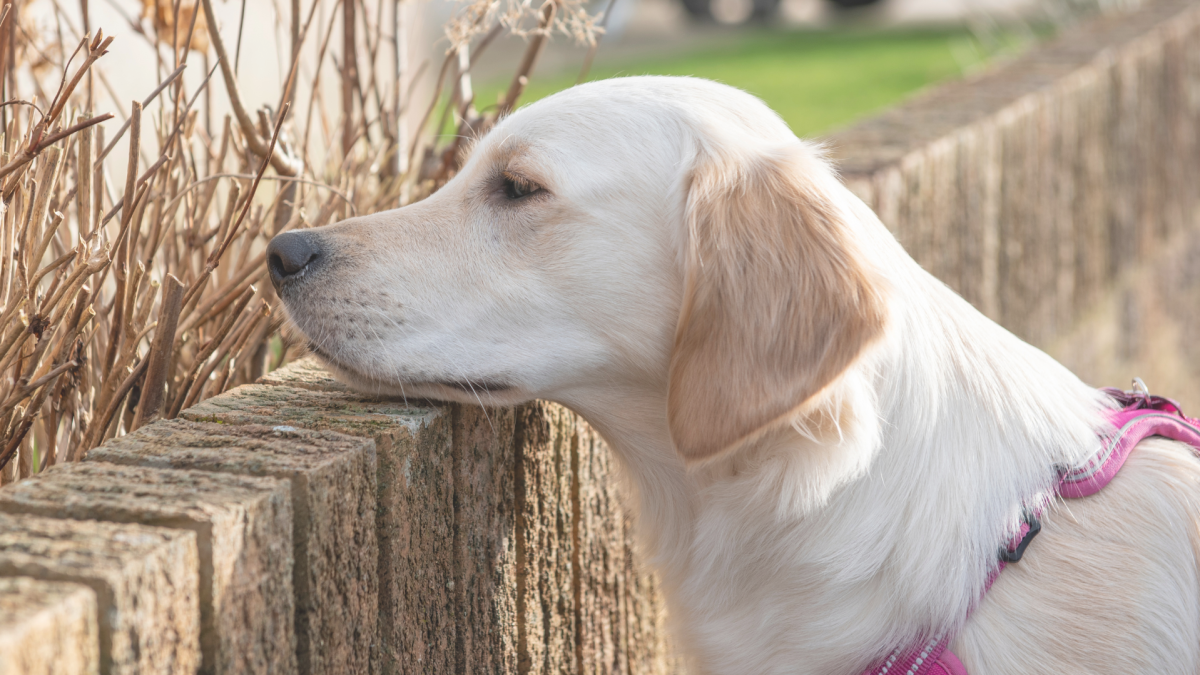
I often find myself watching Harry on walks, wondering what on earth he’s finding so interesting.
We might be in exactly the same spot, facing the same wall, but I know what he’s experiencing is very different from what I am.
To me, it’s just a wall. I might notice the bricks or a bit of moss if I’m paying attention, but most of the time I would pass it without a second thought.
For Harry, it’s full of information.
He slows; his breathing changes and his nose moves with purpose. There is information there that I cannot see, and I find myself wondering what has caught his attention. What feels important today that did not yesterday. What story that wall is holding that I have no access to.
I often wish we could truly know what our dogs are thinking and feeling in those moments. Not just interpret from behaviour, but really understand their experience.
What helps me make sense of it is recognising that we are moving through the same physical space, but not the same perceptual world.
.
Dogs Experience the World Through Scent
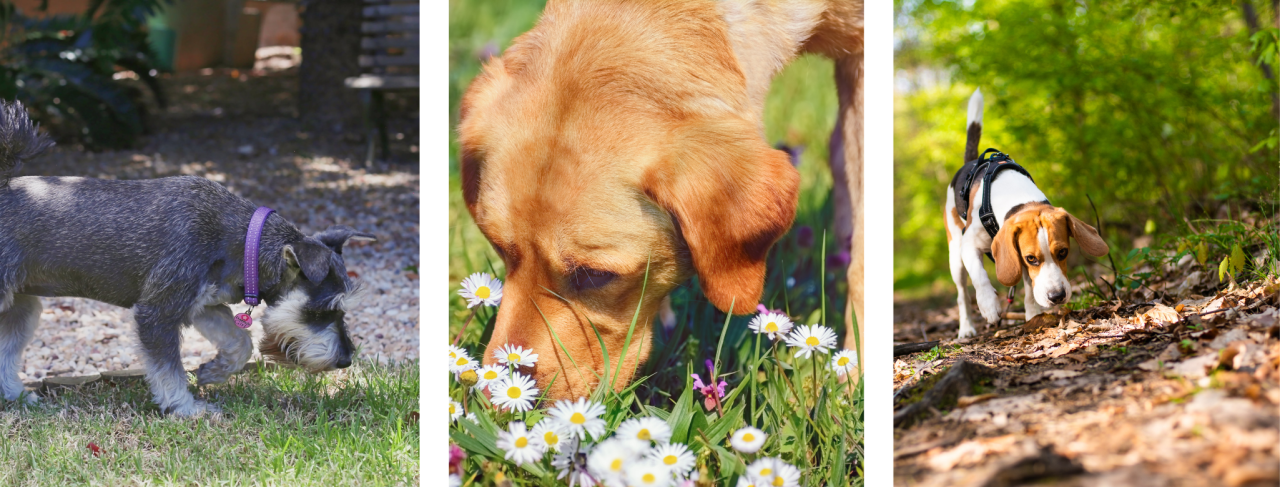
Dogs experience their environment very differently to us. Their sensory world is shaped largely by scent. There are real anatomical differences between dogs and humans when it comes to smell. Humans have around five to six million olfactory receptor neurons. Many dogs have closer to two hundred and fifty million or more, depending on the breed. Inside the nose there is far more surface area devoted to detecting odours, and the part of the brain that processes smell takes up a much larger proportion of their brain than it does in ours. Smell simply plays a much bigger role for them than it does for us.
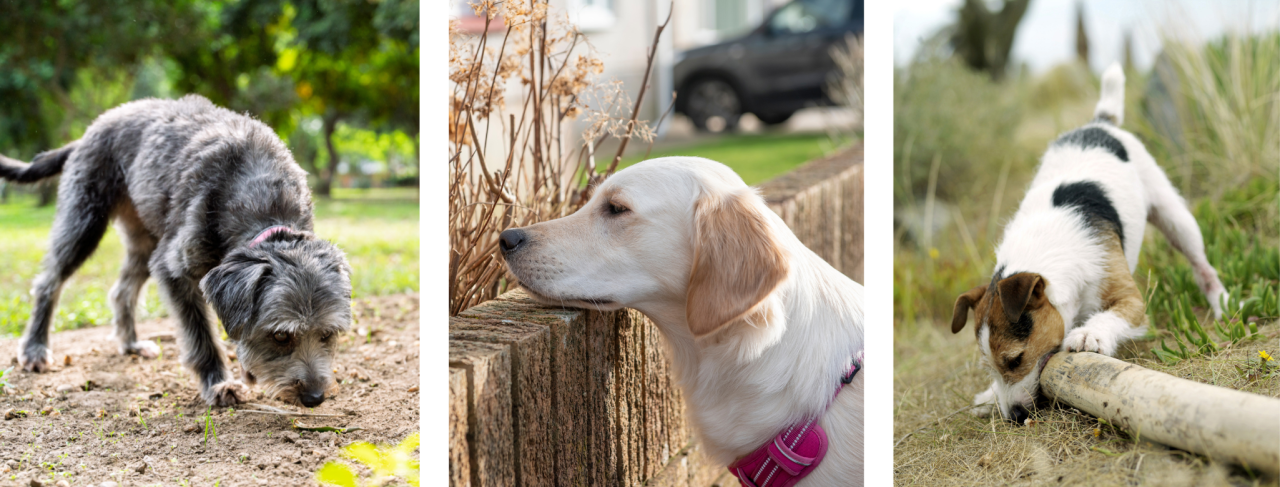
When Harry stops at a wall, he is not simply pausing. He is processing layers of information that may include who has been there, how recently, and possibly even something about their emotional state. Just because we can’t detect anything unusual doesn’t mean nothing is there. Dogs are picking up information we simply can’t access.
.
.
.
What Is Umwelt?
This idea that different species inhabit different perceptual worlds was described by the biologist Jakob von Uexküll, who used the term Umwelt to explain how each organism experiences the world through its own sensory systems and nervous processing. We share the same physical environment, but we do not share the same experienced reality.
That perspective is explored brilliantly in An Immense World, which examines how animals perceive their surroundings in ways that can be difficult for us to imagine. Dogs are not experiencing a simplified version of our world. They are experiencing a completely different one.
.
Why This Matters for Reactive Dogs
And this is important when we think about behaviour, especially reactive behaviour.
Many dogs who bark, lunge, or appear unsettled on walks are responding to information that we cannot detect. The environment may look peaceful to us, yet feel very different to the dog. It might be a scent connected to something unpleasant in the past, the trace of another dog still hanging in the air, or just too much happening at once.
When we view behaviour through the lens of a dog’s sensory world and Umwelt, reactivity begins to look less like an overreaction and more like a response to perceived reality. The dog is behaving in accordance with the world as they experience it, not the world as we assume it to be.
.
Watching With Curiosity
Watching Harry with that understanding changes how I walk with him. I find myself pausing more, giving Harry time to take things in.
Recognising that sniffing is not a distraction from the walk but part of how he makes sense of it. Instead of measuring success by distance covered, I think less about distance covered and more about how he moves through the space, the spots that draw him in, and the changes in his body language and breathing as he takes it all in.
We walk along the same pavement, breathe the same air, and cover the same stretch of ground. But our internal experience of it is not the same.
There is something humbling in accepting that we will never fully step inside a dog’s perceptual world. We can observe carefully. We can learn about canine perception and behaviour. We can refine our interpretation. But there will always be a layer of experience that belongs only to them.
.
Perhaps that is not a limitation, but an invitation.
An invitation to remain curious.
To consider how the world feels from their side of the lead.
And to remember that safety is both an external and internal experience, shaped by perception as much as by place.
.