Why your dog can look safe but still feel unsafe
 Sonia Catherall
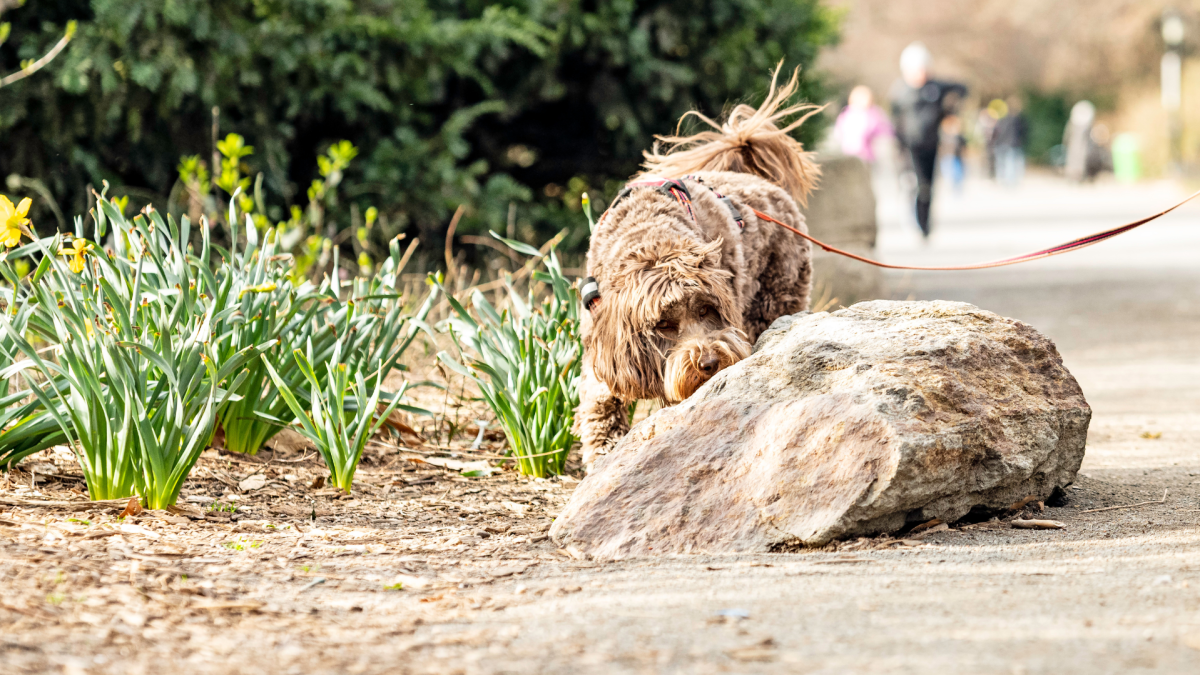
Most guardians try to create safety by managing the outside world. They avoid busy places, create distance from triggers, and calmly reassure their dog that nothing bad is happening. All of that can help.
But it often misses something essential.
Safety is not only about what is happening around your dog.
Safety is also about what your dog’s body is predicting.
A dog can be standing in a quiet field, on a familiar lead, with no obvious threat nearby and still feel deeply unsafe. And when that happens, behaviour changes in ways that can look confusing, frustrating, or even contradictory to the situation.
This is not a training failure or a motivation issue, but a reflection of how your dog’s nervous system is responding in that moment.
.
Safety is not just external
In mammals, feelings of safety are closely linked to internal physiological state. Research in humans and other mammals shows that when the nervous system is calm, the body is more able to prioritise functions linked to health and wellbeing, such as digestion, sleep, immune function, social connection, and learning.
When the nervous system shifts into defence, priorities change. Energy is redirected toward survival. The body prepares for action, protection, or withdrawal. Behaviour becomes faster, sharper, more reactive, or sometimes very still.
Importantly, this shift can happen without conscious awareness. The nervous system is constantly scanning for risk or safety and adjusting accordingly. In behavioural science, this process is often described as automatic threat or safety detection, rather than a deliberate choice.
For dogs, this means that behaviour is often organised by how safe their body feels, not by what the guardian believes should feel safe.
.
Why a dog can be “safe” but feel unsafe
From the outside, a situation may appear low risk. From the inside, a dog’s nervous system may be responding to:
- past learning and associations
- accumulated stress or lack of recovery
- physical discomfort or pain
- sensory overload
- unpredictability or lack of control
- subtle environmental cues that humans miss
Because of this, a dog can react strongly in places that appear calm, or struggle to cope even when all obvious triggers have been removed.
This also explains why training can suddenly fall apart.
When the body is running defence, access to learning, curiosity, and social engagement is reduced. The dog is not refusing to respond. The dog’s nervous system is prioritising survival over connection.
.
What movement toward safety can look like
When a dog’s nervous system is shifting toward safety, you may notice changes such as:
- softer facial muscles and reduced scanning of the environment
- increased sniffing and interest in surroundings
- eating that is calmer and more organised, rather than frantic
- the ability to pause, look away, or disengage
- choices that reduce pressure, such as stepping behind the guardian or increasing distance
They are signs that the dog’s body is relaxing enough to process information and make choices.
.
What movement away from safety can look like
When a dog is shifting away from safety, behaviour often becomes more survival driven. This may include:
- rapid shifts in attention and sharp orienting
- hard staring, tight mouth, shallow or rapid breathing
- frantic pulling, barking, lunging, circling, or pacing
- difficulty taking food, or grabbing food without settling
- sudden freezing, shutting down, or withdrawing
These behaviours are often misunderstood as stubbornness, over arousal, or “bad habits”. In reality, they are signals that the dog’s nervous system is under pressure.
.
What actually helps
Supporting safety is not about controlling behaviour. It is about supporting the conditions that allow the nervous system to settle.
Reduce pressure first
Distance is not avoidance. Distance is information to the nervous system that threat is not imminent. Increasing space can be one of the fastest ways to support regulation.
Make safety predictable
Clear exits, familiar patterns, and shorter exposures help reduce uncertainty. Predictability allows the nervous system to stand down more easily.
Use co regulation
Dogs are highly sensitive to the behaviour of trusted humans. Your pace, voice, and body position can communicate steadiness and availability without demanding anything from your dog. This is not reassurance in the verbal sense. It is shared regulation through presence.
Let sniffing do its job
Sniffing is often a pathway back toward regulation. It supports environmental processing and can help a dog move out of defensive responding. When sniffing returns, learning often becomes possible again.
.
What this means going forward
Supporting a dog who struggles is not about removing every challenge from their world. It is about understanding how safety is felt in the body and recognising when your dog does not yet have access to that state.
When safety increases, behaviour often changes on its own. Learning becomes easier. Connection becomes possible. The dog is no longer organised around defence.
Safety is not something you tell a dog.
It is something their nervous system experiences.